Skip to content

Test Your Product Idea Before Writing Code

We shape your concept into flows, screens and a clickable prototype that users can try, investors can see and developers can estimate accurately.

Brewlane · Pick-up flowSample app · concept prototype

8:12

Good morning, IshaWhat's brewing?

IS

Indiranagar · ready in 6 min

Your usualsSee all

Iced Mocha₹260 · MMatcha Latte₹280 · M
HomeMenuOrdersMe

On tap Today's pour card → Drink · Push from right · 380 ms

Product design and prototyping to take the guesswork out of version one

Building software just to find out whether an idea works is expensive. A clickable prototype answers many of the same questions for a fraction of the effort: do users understand the core flow, which features matter, and what the product really needs to do. Product design and prototyping turns a concept into something people can tap through and react to.

Founders use our prototypes for user interviews and investor meetings. Product teams inside larger companies use them to win internal approval and align stakeholders before committing engineering time. Agencies and in-house teams use them to get firm development estimates, because a tested prototype removes most of the ambiguity that inflates quotes.

Nexzem runs a short discovery to define the problem, target users and success measures, then sketches flows and builds a Figma prototype in quick rounds. We test it with a handful of target users, revise, and finish with a prototype and feature specification ready for development, by us or by any team you choose.

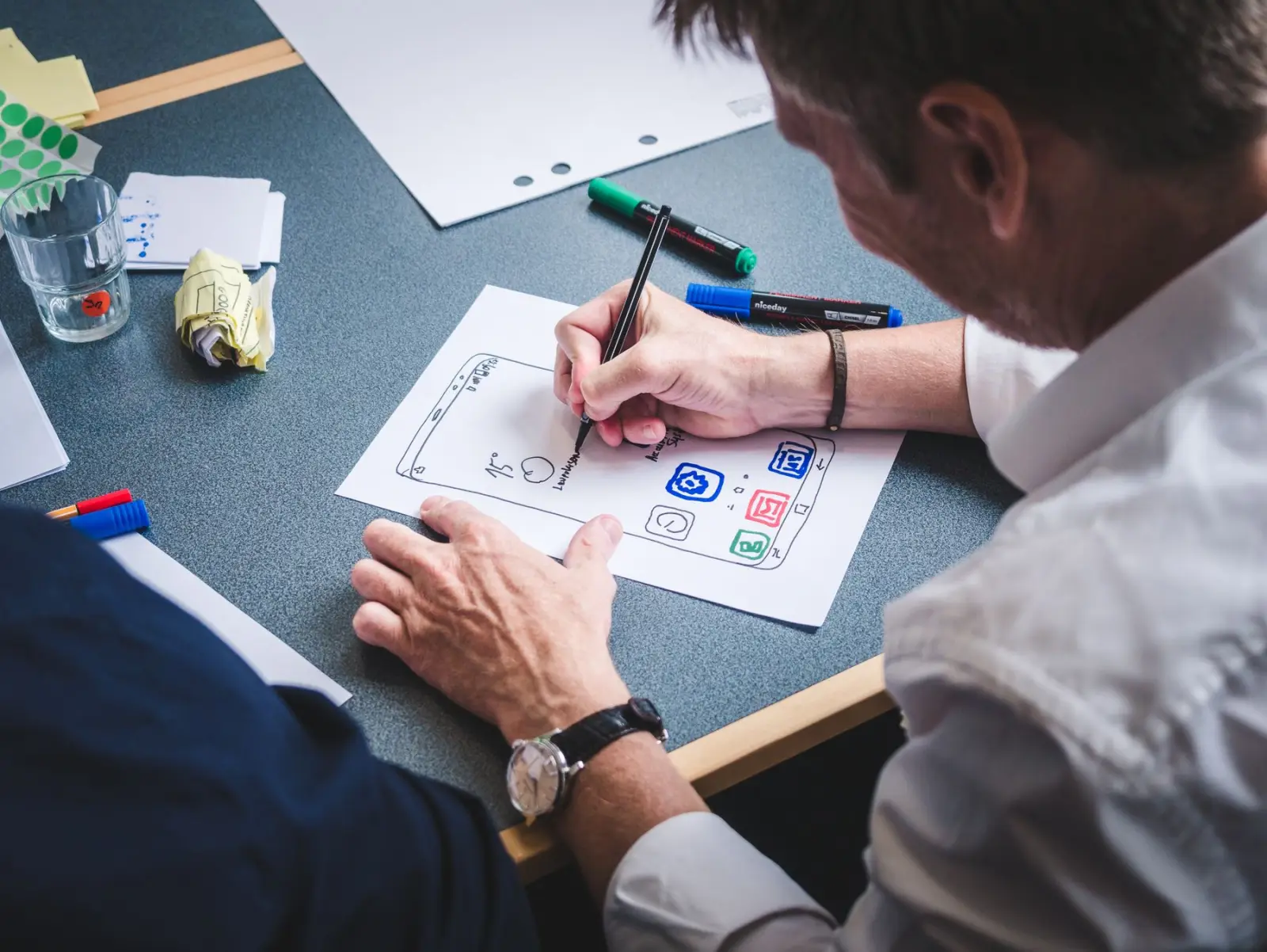
From napkin to clickable

The same screen of the sample app at every fidelity we work in. Each stage answers a different question, cheaply, before the next one costs more.

Sample app · Brewlane · Drink screen

1/4 · Sketch

Sketch

Paper, pen, ten minutes

What we decide
What belongs on the screen at all, and in what order.
How we test it
Walk the team through it out loud. Nothing is precious yet.

Notes on the screen

  1. 1Drawn cups, not photos: every café shoots drinks differently; illustration keeps the menu consistent.
  2. 2Size before milk: the order a barista calls it out.
  3. 3The price sits on the button, so nobody hunts for a total.

Our Product Design & Prototyping services

Turn product ideas into clickable prototypes you can test with users and show investors within weeks.

  1. 01

    Product Discovery

    Workshops to frame the problem, target users, competitors and the core value your product must deliver in its first release.

  2. 02

    User Flows and Wireframes

    Map every key path through the product and lay out screens quickly, so structure is agreed before any visual detail.

  3. 03

    Clickable Prototypes

    Interactive Figma prototypes that behave like a real app on phone or desktop, ready for demos and structured testing sessions.

  4. 04

    Concept Testing

    Sessions with target users to see where they hesitate, what they ignore and which features they actually value enough to use.

  5. 05

    Investor Demo Prototypes

    Polished, story-driven prototypes that show investors how the product works and why its target users will care about it.

  6. 06

    MVP Specification

    A feature list, user stories and acceptance criteria tied to the prototype, ready for accurate development estimates from any team.

How Product Design & Prototyping engagements run

Clear stages with a review at the end of each, so you always know what happens next and what it costs.

  1. 1Kick-off

    Discovery Sprint

    Define the problem, users, goals and scope for the first version.

  2. 2Stage 2

    Flows and Wireframes

    Map journeys and lay out key screens for quick review.

  3. 3Stage 3

    Prototype

    Build a clickable high-fidelity prototype in Figma.

  4. 4Handover

    Test and Refine

    Run user sessions, revise the design and finalise the specification.

Product Design & Prototyping with Nexzem: what you get

  • Nexzem designResolved

    Cheaper learning

    Problems found in a prototype cost hours to fix instead of weeks of rework in code.

  • Nexzem designResolved

    Stronger pitches

    Investors and stakeholders respond better to a product they can click through than to slides.

  • Nexzem designResolved

    Accurate estimates

    A tested prototype and specification leave developers far less to guess, tightening quotes.

  • Nexzem designResolved

    Team alignment

    Everyone works from the same visual reference, reducing misunderstandings later.

Choosing the right prototype fidelity

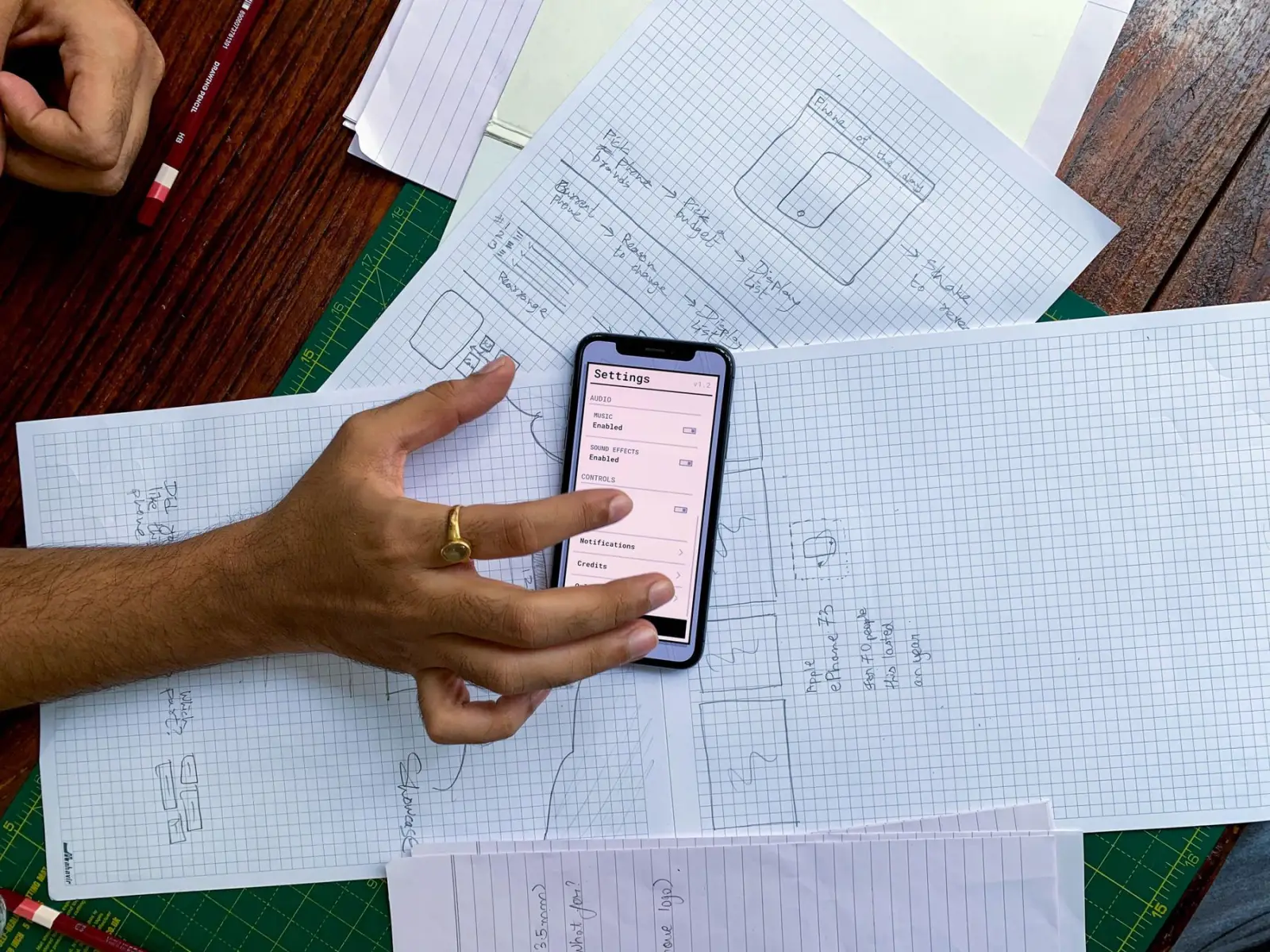
Prototypes range from paper sketches to interactive designs that look and behave almost like finished software. Choosing the right fidelity depends on the question you need to answer. Early concepts benefit from rough wireframes that invite feedback on structure and flow without distracting debates about colors or fonts.

Mid-fidelity prototypes add realistic layout and content, testing whether users can complete key tasks. High-fidelity prototypes, with final visual design and detailed interactions, suit investor demonstrations, stakeholder approvals and usability testing of specific details such as forms or onboarding. A common mistake is jumping straight to polished designs. Teams become attached to beautiful screens and resist changes that research reveals are necessary. Starting rough and increasing fidelity as confidence grows keeps learning cheap and change easy.

Some questions need technical evidence rather than design. If the main uncertainty is whether something can be built, a proof of concept may be more useful than a visual prototype. Many projects run both in parallel to address design and technical risks together.
Running concept tests with real users

A prototype only becomes valuable when real target users interact with it. Watching people attempt tasks reveals confusing navigation, unclear wording and missing information that internal teams cannot see because they already know how the product is supposed to work. The steps below make tests productive.

Avoid leading participants. Ask them to complete tasks, such as booking an appointment, and observe what they do rather than asking whether they like the design. Behavior is more reliable than opinions. Testing several alternative concepts with the same users shows which direction resonates best, before committing development effort to one option. Share findings quickly with the whole team through short summaries and video clips. Seeing real users struggle is often the most persuasive argument for changes.

  • Recruit participants who match the target audience.
  • Write realistic tasks rather than leading questions.
  • Observe and record sessions, with consent.
  • Note where people hesitate, misunderstand or give up.
  • Prioritize fixes by frequency and severity.

From prototype to development handoff

A validated prototype becomes the blueprint for development. It clarifies scope for a minimum viable product, showing exactly which screens, states and interactions the first release needs. Developers can estimate effort more accurately from a clickable prototype than from written requirements alone.

Good handoff includes more than screens. Specifications for edge cases, empty states, error messages, responsive behavior and accessibility prevent guesswork during development. Design systems with reusable components keep implementation consistent and speed up future features. Designers should remain involved during development to answer questions and review builds. Small details often change when real data and technical constraints appear, and quick design input keeps quality high without delaying sprints.

For early budgeting, tools such as our app cost calculator give rough ranges, while a prototype-based estimate from a delivery team provides the firmer figures needed for funding decisions. Keep the prototype updated as decisions change, so it remains the single reference for the whole team.

Where Product Design & Prototyping fits

  • Investor demo for a startup founder

    A founder raising a seed round uses a high-fidelity clickable prototype to demonstrate the product vision in pitch meetings, showing realistic user journeys that make the idea tangible before any production code exists.

  • Concept validation for an enterprise tool

    An enterprise team prototypes a new internal approval tool and tests it with employees from several departments, uncovering workflow differences that reshape requirements before the development budget is formally committed.

  • Companion app for a hardware product

    A hardware startup prototypes its device companion app, testing setup, pairing and daily use flows with early customers, ensuring the software experience matches the product before firmware and app development begin.

  • Feature validation for a SaaS product

    A SaaS company prototypes two approaches to a major new reporting feature and tests both with existing customers, choosing the design that users completed tasks with fastest before building it.

  • Onboarding concept for a fintech app

    A fintech team prototypes a simpler account opening flow with clearer explanations of document requirements, testing it with target users to reduce abandonment before changing the live onboarding process for every new customer.

Technologies we use for product design & prototyping

Proven, well-supported tools chosen for your scale, budget and team, never for novelty.

  • Figma
  • React
  • Next.js
  • Flutter
  • HTML5
  • Jira

Product Design & Prototyping FAQs

Something else on your mind? Ask a consultant and get a reply within one business day.

How much does a product prototype cost?

Cost depends on the number of flows and screens, the fidelity level, whether user testing is included, and how many revision rounds you need. A prototype of one core flow costs much less than a full product. We give a fixed quote after a free consultation.

How long does it take to build a prototype?

Most clickable prototypes take 2-5 weeks, including discovery and at least one round of user testing.

Is a prototype the same as an MVP?

No. A prototype simulates the product so you can test and demo it without code. An MVP is working software real users rely on. A good prototype makes the MVP faster and cheaper to build.

Can you develop the product after the prototype?

Yes. Our engineering team can build the MVP from the prototype, or we hand over files and specifications to the developers you choose.

Will my idea stay confidential?

Yes. We sign an NDA on request before you share details, and you own all design files and specifications we create.

Which tools do you use for prototypes?

We mainly use Figma for wireframes, high-fidelity designs and interactive prototypes, because it supports real-time collaboration, design systems and easy sharing for testing. For complex interactions or data-driven concepts, we sometimes build coded prototypes using web technologies to test behavior more realistically.

Can a prototype help us estimate development cost?

Yes. A prototype defines screens, flows and interactions clearly, which allows developers to estimate effort with much more confidence than from a written idea. It also exposes complexity early, such as integrations or unusual interactions, so estimates include them rather than discovering them during development.

How many design concepts should we test?

Testing two or three distinct concepts early is often useful, because it shows which direction users understand and prefer. Testing too many at once confuses participants. Once a direction is chosen, later rounds refine one design in more detail with additional tasks and participants.

Since our first project

Happy clients
250+
Projects delivered
150+
Industries served
15+
Pricing and engagement models
  • Mutual NDA first

    Signed before any detailed discussion of your idea.

  • You own the code

    100% of the source code and IP is yours on delivery.

  • Reply in one business day

    From a solutions consultant, Mon to Sat, 09:30 to 18:30 IST.

  • Estimate in 48 hours

    A fixed quote or team estimate, broken down by milestone.

We work with clients across the USA, UK, Australia, UAE, New Zealand and India.

Where we work

Tell us what you're building.

A solutions consultant replies within one business day with next steps, a rough estimate and a suggested team.